
Trying To Conceive? This One’s For You
Aisyah is 18. “Growing up, I knew I was different,” she says, but I didn’t fully understand why.”Other children ran across the playground without thinking about it. For her, getting around sometimes meant using a wheelchair and learning different ways to do everyday things. As she grew older, there was more to manage too – bladder and bowel care, hospital visits, learning to become independent on her own terms.
“People assume it’s just about walking,” she says. “It’s not.”
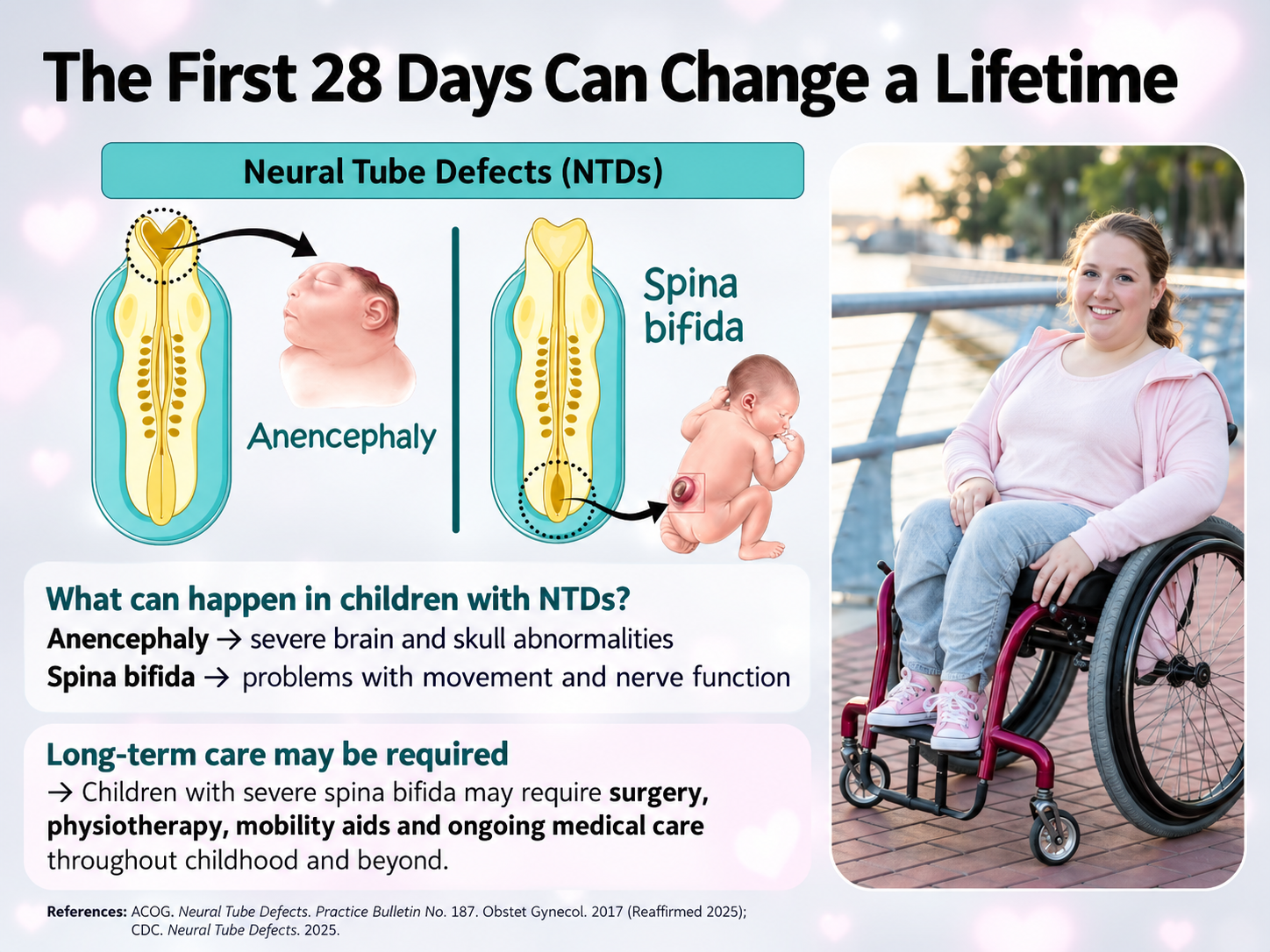
One day, she searched online: How long do people with spina bifida live? “I was scared by what I found.” she says. Overtime, she learned there wasn’t one single answer. Many people with spina bifida - one of the more common neural tube defects (NTDs), now live well into adulthood, with some reaching their 70s and 80s, although life expectancy can vary depending on the severity of the condition11.Other NTDs can be far more severe. Anencephaly, where major parts of the baby’s brain and skull does not develop, and severe encephalocele can be fatal before or shortly after birth2. None of this makes Aisyah’s life any less full. But it does make her story worth telling.
The important part happens earlier than you think. NTDs begin very early in pregnancy, usually during the third or fourth week of pregnancy, when the neural tube, which eventually forms the brain and spinal cord, is meant to close completely (Figure 1). In Aisyah’s case, part of her spine did not close as it should, leaving the spinal cord and nerves vulnerable. Her mother didn’t know she was pregnant yet.
And that is what Aisyah wants every woman trying to conceive to know: some of the most important developments in pregnancy begin before those two lines ever appear on a pregnancy test. But there is something women can do before that moment arrives. If pregnancy is somewhere on your radar, put this near the top of your TTC checklist, above the ovulation strips, above the cycle tracking app: 400 micrograms (mcg) of folic acid, every day, starting three months before you start trying.
This isn’t a wellness trend. Folic acid taken before conception and during early pregnancy is one of the best-established ways to reduce risk of neural tube defects (NTDs). Major clinical reviews have found that taking folic acid around the time of conception can reduce NTD-affected pregnancies by up to 70%3.
Timing matters. Don’t wait for a positive pregnancy test. Daily folic acid should ideally begin about three months before conception, giving folate levels time to build up before the neural tube begins to form and close4. In Malaysia, more than 8 in 10 women of childbearing age had not reached this protective level5.
“But I already eat healthily…” That’s an excellent foundation. Leafy green vegetables, beans, citrus fruits, and fortified foods are all good sources of folate. But consistently getting enough folate from food alone can be difficult. For perspective, reaching around 400 mcg of dietary folate equivalent (DFE) from raw spinach alone would take nearly seven cups in a day. That is why women planning a pregnancy are advised to take folic acid supplement alongside a balanced, folate-rich diet, rather than choosing one or the other.
If TTC is on your mind, remember: 400 – 3 – Before
- 400 mcg folic acid daily
- Start about 3 months before the positive test, not after.
For healthy women of childbearing age, 400 mcg daily is the standard pre-pregnancy recommendation6,7For a simple daily option, Appeton Essentials Folic Acid provides 400 mcg of folic acid in one tablet, matching the standard daily amount recommended for women planning a pregnancy. Its once-daily format makes folic acid easy to build into a regular preconception routine, while the three-month pack conveniently covers the recommended preconception period. With almost three decades of presence in Malaysia, Appeton Essentials Folic Acid is a familiar pre-pregnancy folic acid brand and has been used in O&G practice across private hospitals and clinics.
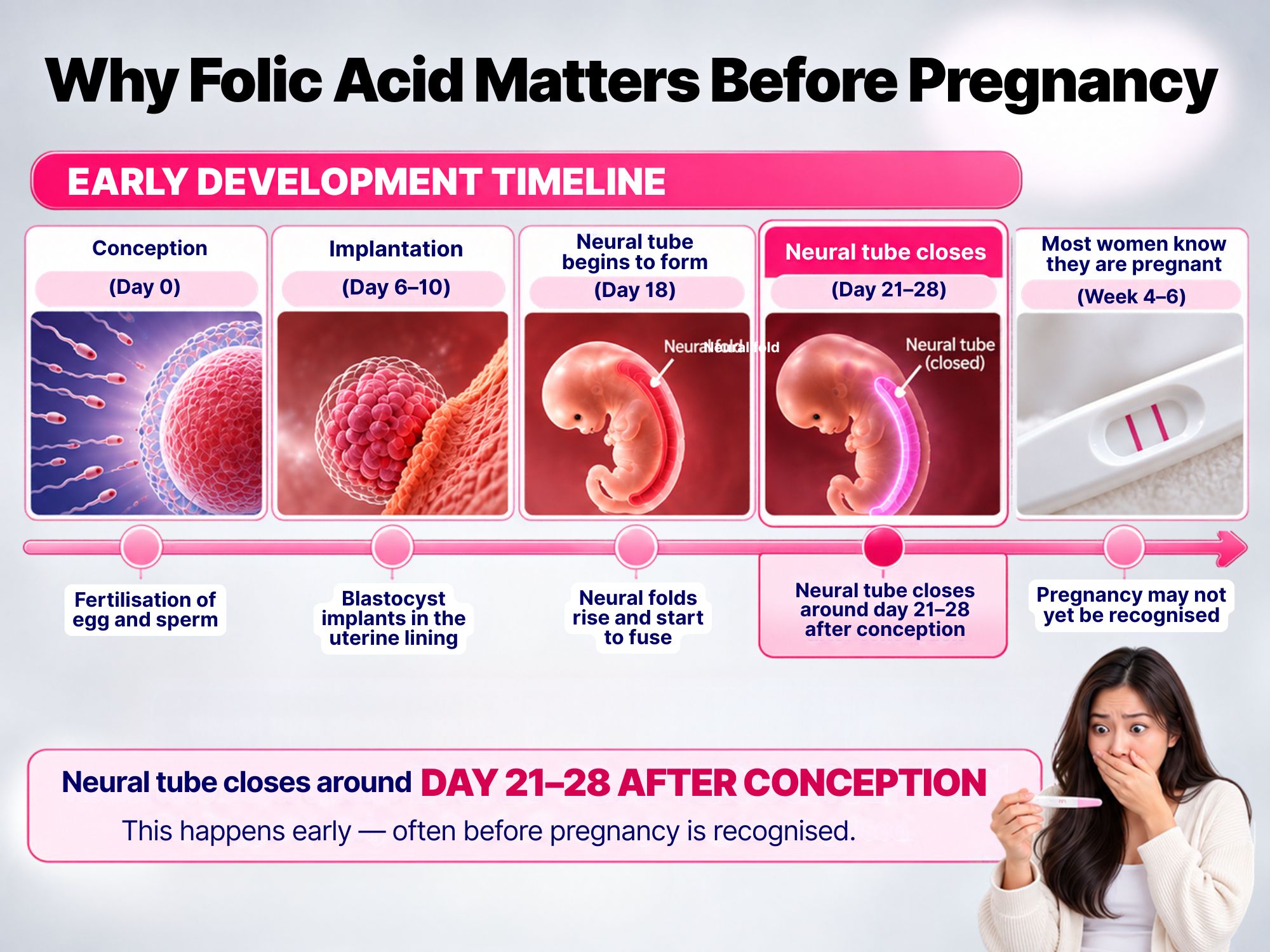
Figure 1 The neural tube closes around days 21–28 after conception, often before a woman knows she is pregnant.
References:
- Shavelle, R. M., Paige, M. K., Brooks, J. C., & Strauss, D. J. (2026). Life expectancy in open spina bifida. Developmental medicine and child neurology, 68(9), 1253–1260.
- Boo, N. Y., Cheah, I. G., Thong, M. K., & Malaysian National Neonatal Registry (2013). Neural tube defects in Malaysia: data from the Malaysian National Neonatal Registry. Journal of tropical pediatrics, 59(5), 338–342.
- Green N. S. (2002). Folic acid supplementation and prevention of birth defects. The Journal of nutrition, 132(8 Suppl), 2356S–2360S.
- Houghton, L. A., Gray, A. R., Rose, M. C., Miller, J. C., Hurthouse, N. A., & Gregory, J. F., 3rd (2011). Long-term effect of low-dose folic acid intake: potential effect of mandatory fortification on the prevention of neural tube defects. The American journal of clinical nutrition, 94(1), 136–141.
- Khor, G. L., Duraisamy, G., Loh, S. P., & Green, T. (2006). Dietary and blood folate status of Malaysian women of childbearing age. Asia Pacific journal of clinical nutrition, 15(3), 341–349.
- National Center on Birth Defects and Developmental Disabilities (Centers for Disease Control and Prevention). Division of Birth Defects. (2010). Facts about folic acid.
- National Coordinating Committee on Food and Nutrition (NCCFN). (2017). Chapter 10: Folate (Vitamin B9). In Recommended nutrient intakes for Malaysia. Ministry of Health Malaysia.